Trivago
At Trivago, I worked on the Search Team to enhance the hotel search experience, creating user-focused designs and prototypes, while ensuring smooth communication and hand-offs with developers.

project overview
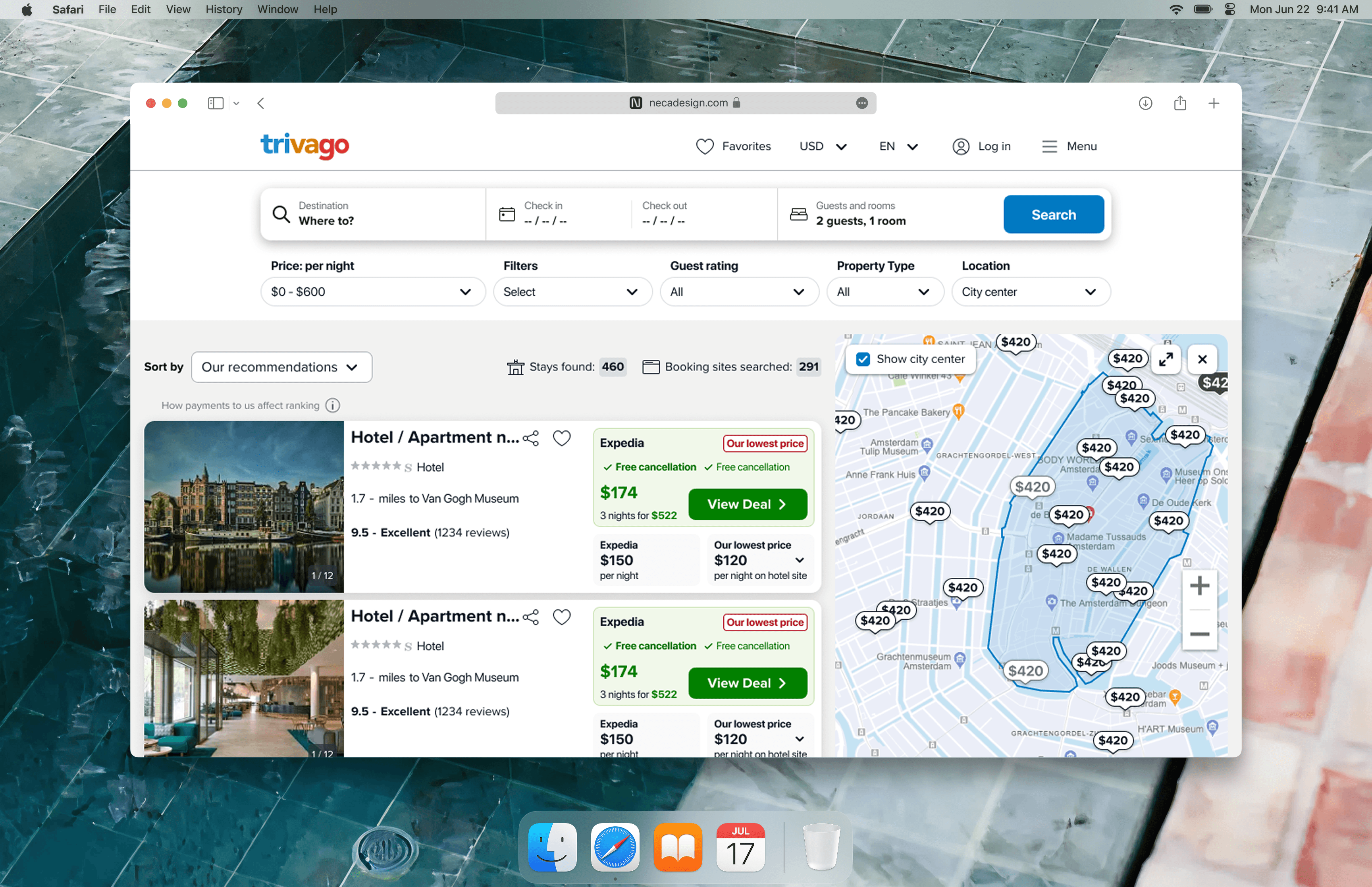
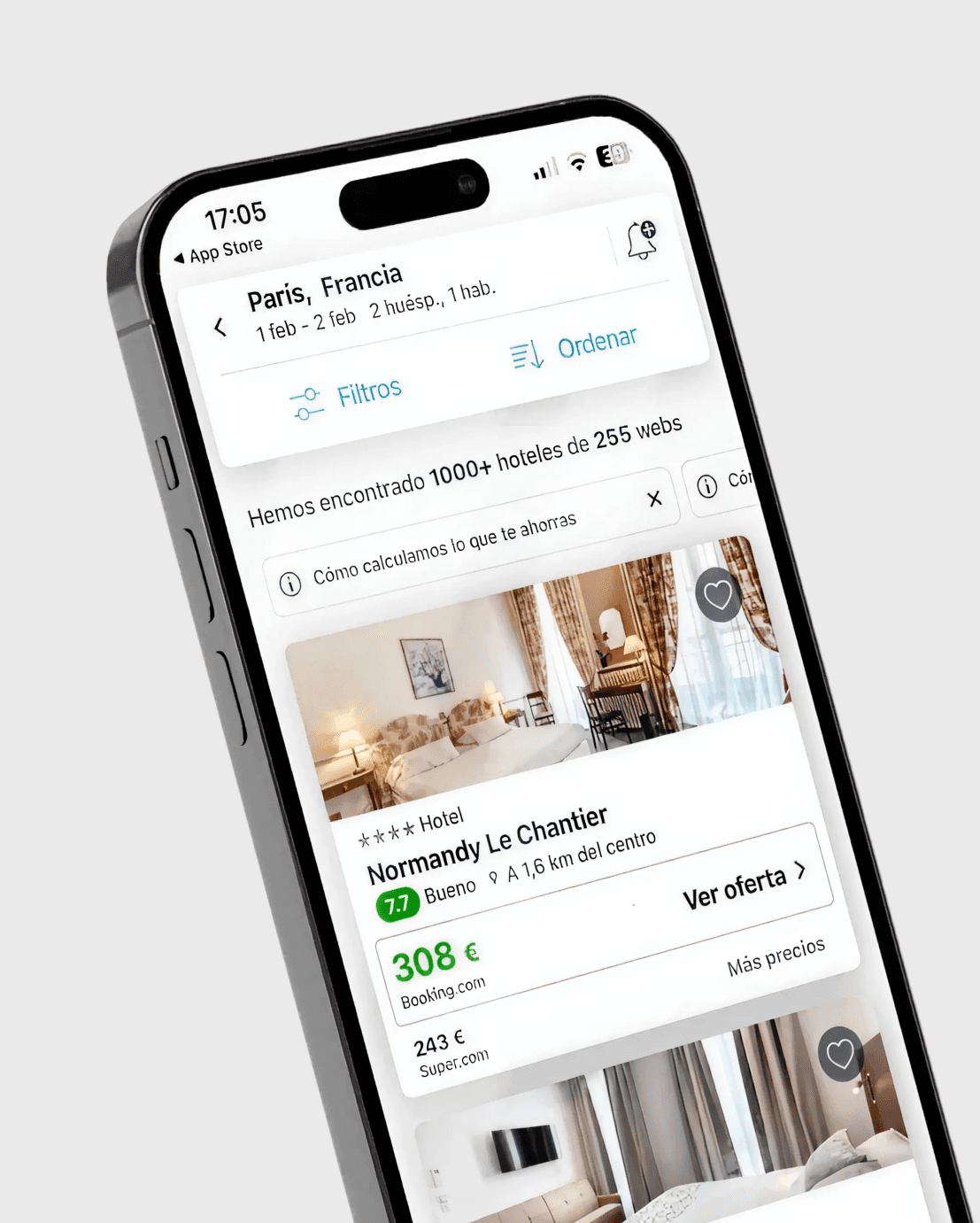
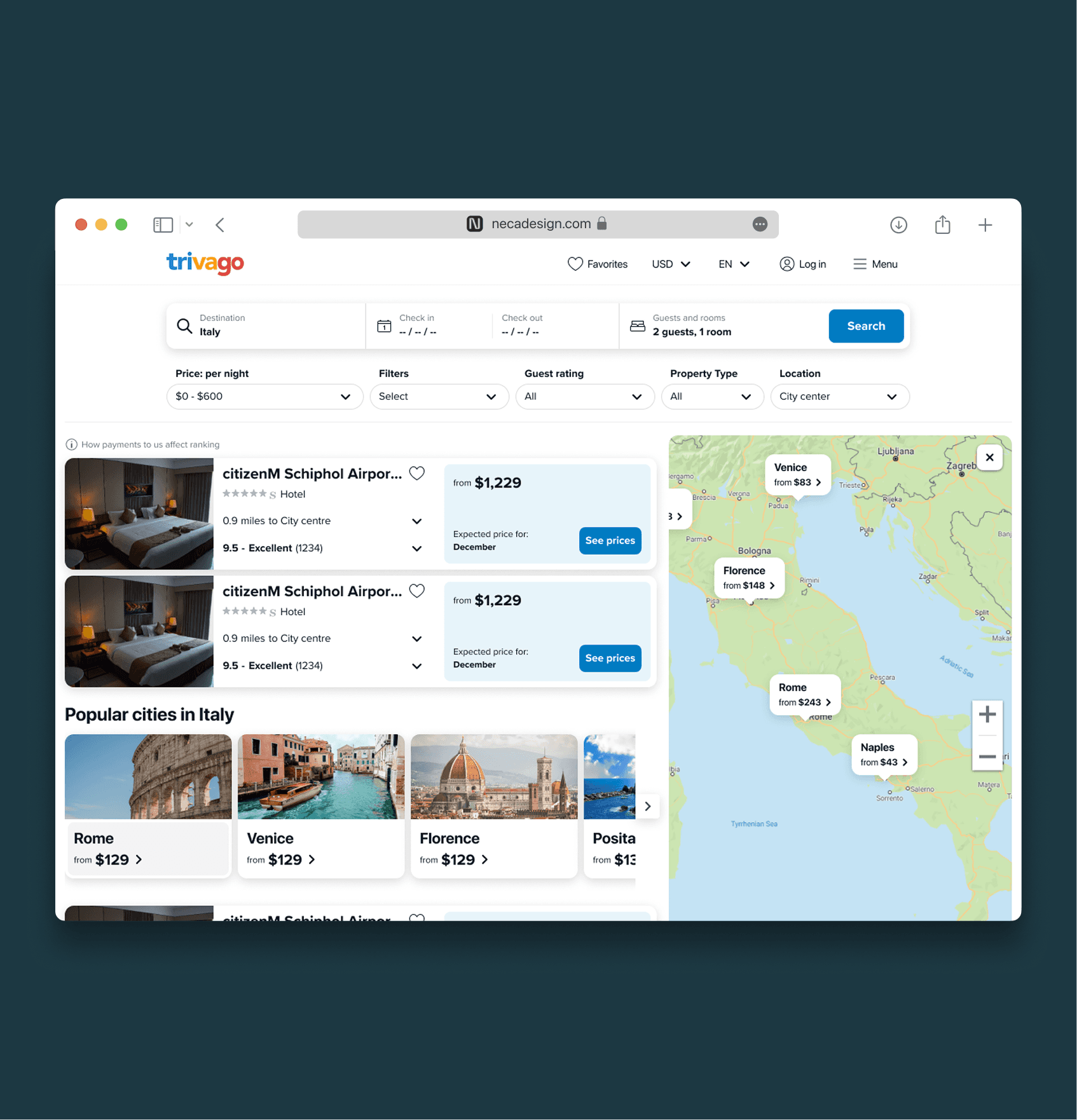
The main goal was to improve the vacation accommodation search experience for users. We analyzed interviews, heat maps, and click tests to inform priorities based on resources, difficulty, and impact. During my time at Trivago, I worked on Quick Filters, Location Search, City Center Polygon, Walking Distance Radius, the Alternative List, persistent city name markers, and a Hover State Carousel to enhance usability and interactivity.
the Approach
Throughout the design process, I worked closely with designers, project managers, and developers, ensuring clear communication that allowed me to refine the designs and achieve the best possible solutions. Once designs were handed off, I stayed in close contact with developers to resolve any questions and conducted thorough design QAs to ensure the final implementation matched the intended user experience.
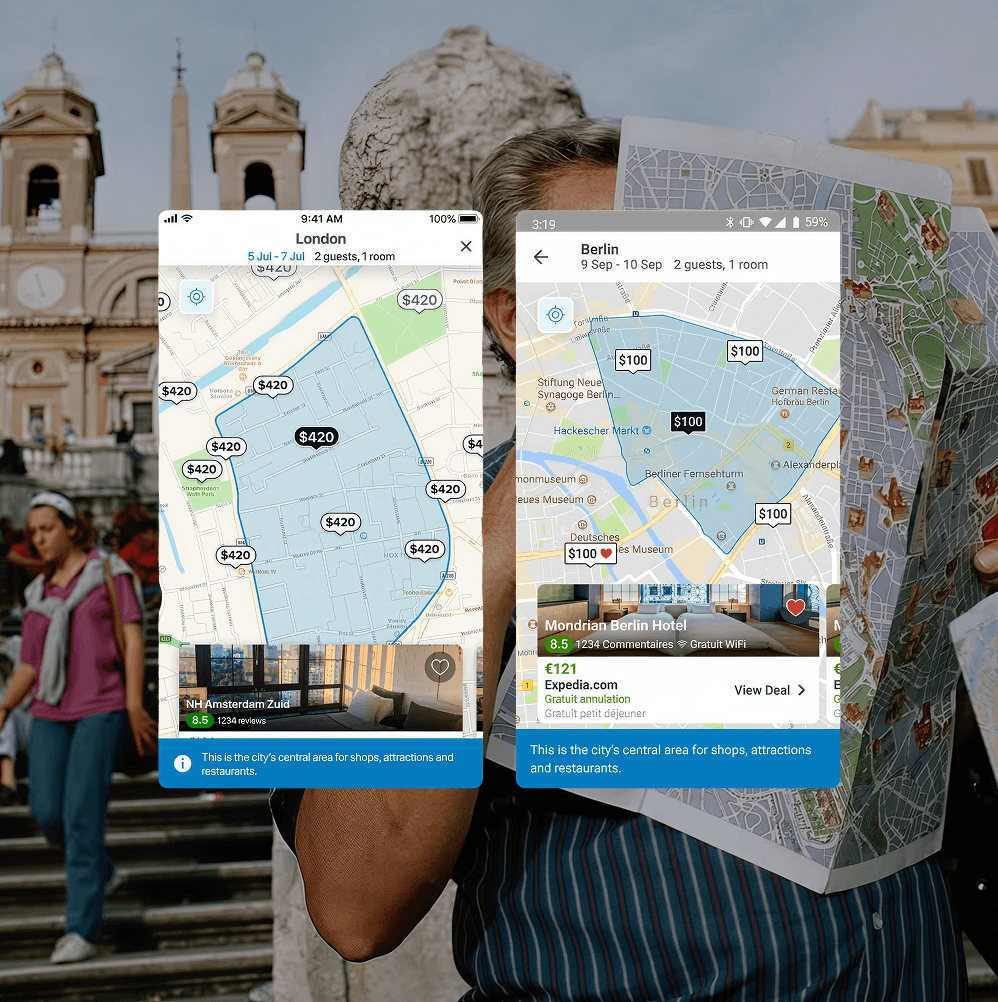
My work didn’t end at delivery; I analyzed test results alongside project managers to evaluate whether iterations were necessary or if we should shift focus to other priorities, always keeping the users’ needs at the center of every decision.
Throughout this process, I also worked in parallel on the design system. Trivago was updating its system, which was partially modernized but still inconsistent. I focused on optimizing components—especially cards used in search results and the map (Split View and Map Overlay)—ensuring that new designs were both scalable and visually consistent across the product.
DURING MY TIME AT TRIVAGO, I STRENGTHENED MY SKILLS AS A PRODUCT DESIGNER, WORKING ACROSS THE ENTIRE DESIGN PROCESS—FROM IDEATION TO FINAL IMPLEMENTATION. I BECAME HIGHLY PROFICIENT IN FIGMA, REFINING MY PROTOTYPING SKILLS AND CONTRIBUTING TO THE DESIGN SYSTEM BY CREATING AND OPTIMIZING KEY COMPONENTS.
This hands-on experience allowed me to effectively solve UX/UI problems, collaborate with cross-functional teams, and maintain consistency across the product, improving the overall user experience.
Conclusion
I DEVELOPED A STRATEGIC MINDSET, BALANCING USER NEEDS WITH BUSINESS GOALS, ITERATING ON DESIGNS BASED ON FEEDBACK AND USABILITY TESTS. I AIM TO EXPAND MY RESEARCH SKILLS, COLLABORATE CLOSELY WITH ENGINEERS AND PRODUCT MANAGERS, AND CONTINUE CREATING IMPACTFUL, USER-CENTERED, DATA-DRIVEN SOLUTIONS.
VIEW NEXT PROJECT
the vurger
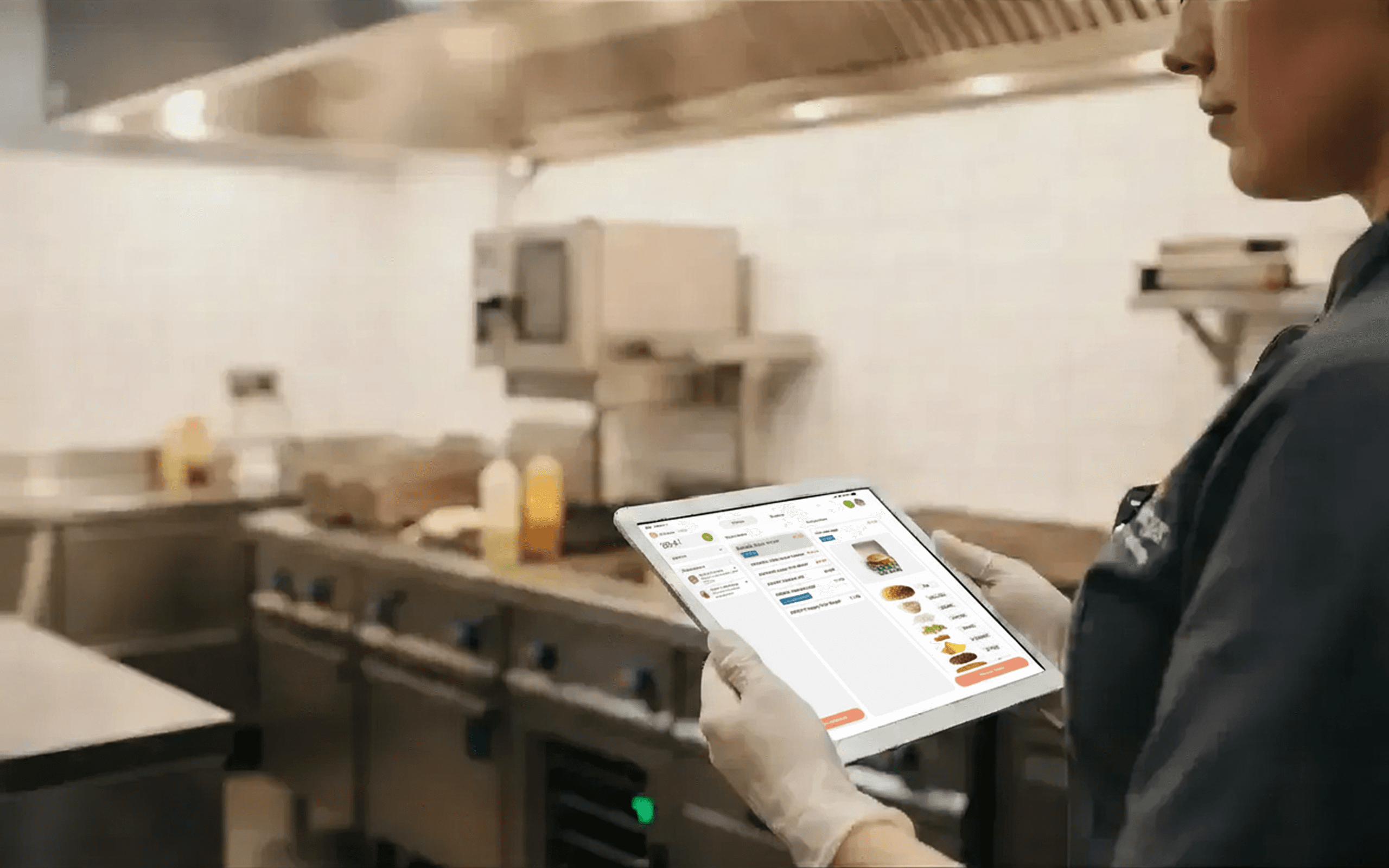
The Vurger is a vegan fast-food chain aiming to improve in-restaurant order management. This project focused on designing a tool to streamline order assignment, tracking, and workflow.
Trivago
At Trivago, I worked on the Search Team to enhance the hotel search experience, creating user-focused designs and prototypes, while ensuring smooth communication and hand-offs with developers.
CurioCity
To inspire young people and show the impact of industry, I designed a pixel-art virtual game with engaging characters, immersive environments, and merchandising that builds community and loyalty.